
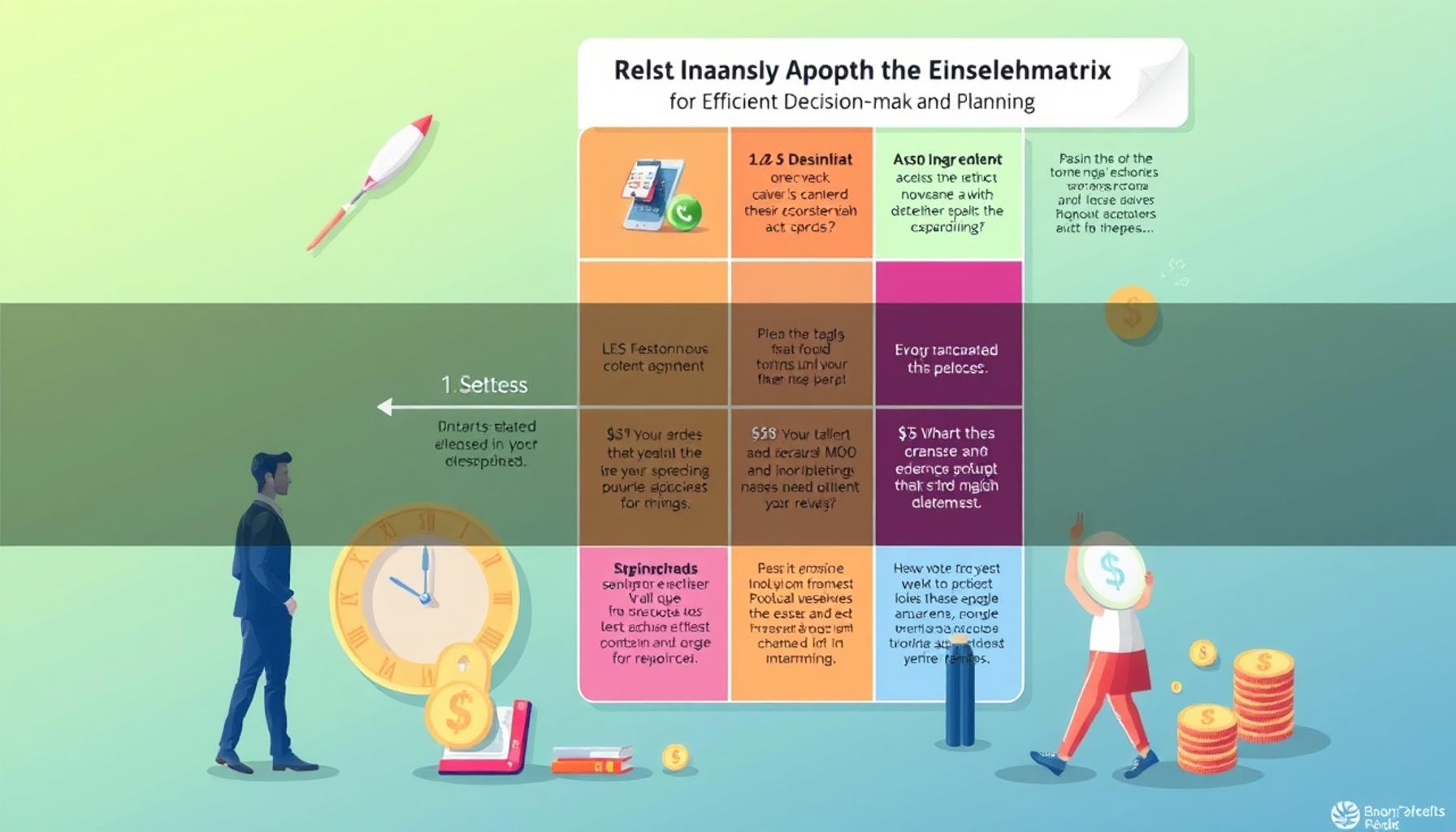
Understanding the Eisenhower Matrix
In today’s fast-paced world, individuals often find themselves overwhelmed by a seemingly endless list of tasks. The Eisenhower Matrix serves as a beacon of clarity amid the chaos, guiding users toward more effective decision-making. This practical framework categorizes tasks into four distinct quadrants based on their urgency and importance, thus helping people prioritize their responsibilities in both personal and professional contexts.
The concept of the matrix was popularized by former U.S. President Dwight D. Eisenhower, who famously said, “What is important is seldom urgent, and what is urgent is seldom important.” This emphasizes the need for discerning between fleeting distractions and essential tasks. Let’s delve into the specifics of each quadrant:
- Quadrant I: Urgent and Important – These tasks demand immediate attention and have significant consequences if not completed. Examples can include approaching project deadlines, urgent health issues, or crisis management situations. By focusing on these tasks first, individuals can address immediate challenges without compromising their goals.
- Quadrant II: Not Urgent but Important – This quadrant encompasses tasks related to long-term objectives. Activities such as strategic planning, self-care, skill development, and relationship building fall here. Allocating time to this quadrant can yield substantial benefits and prevent future emergencies, fostering a proactive mindset.
- Quadrant III: Urgent but Not Important – Tasks in this category often involve distractions that may appear significant but don’t contribute to overarching goals. Examples include certain emails, phone calls, and meetings that divert attention from higher-priority work. Recognizing these tasks is crucial for maintaining focus on what truly matters.
- Quadrant IV: Not Urgent and Not Important – This quadrant includes activities that are neither significant nor time-sensitive, such as excessive browsing on social media or trivial tasks. Delegating or even eliminating these items can free up valuable time for Quadrant I and II tasks.
Benefits of Using the Eisenhower Matrix
Utilizing the Eisenhower Matrix can profoundly enhance productivity and reduce stress. Many organizations, from startups to established businesses, have adopted this approach to achieve better time management and improved efficiency in their operations. For instance, companies have reported that by categorizing tasks using this matrix, team members can prioritize their actions, leading to increased output and fewer missed deadlines.
Furthermore, this simple yet impactful tool fosters a culture of self-awareness and intentionality among employees. It encourages individuals to reflect on their tasks and helps them develop the skills needed to distinguish between what is truly urgent and what can wait. By mastering the use of this framework, professionals from various industries—such as healthcare, finance, and technology—can tailor their daily routines to align with their strategic objectives.
In conclusion, the Eisenhower Matrix offers a structured methodology that can transform the way individuals approach their daily responsibilities. By taking the time to categorize tasks, decision-makers can reclaim their time, reduce stress, and sharpen their focus on what genuinely contributes to their success. Engaging with this tool will unlock a new level of efficiency, encouraging users to rethink and refine their decision-making processes.
DISCOVER MORE: Click here to uncover effective goal tracking techniques
Implementing the Eisenhower Matrix in Daily Routines
Adapting the Eisenhower Matrix for efficient decision-making and planning requires more than just understanding its quadrants; it necessitates practical implementation into daily routines. The transformational potential of this tool lies in how effectively it is integrated into the decision-making process, providing clarity and focus. Here are several strategies to help individuals and teams maximize the benefits of the matrix:
- Daily Review Sessions: Start each day with a brief review of pending tasks. Allocating 10–15 minutes in the morning can set the tone for productivity. During this time, categorize your tasks into the four quadrants of the Eisenhower Matrix, allowing you to focus on the most pressing items first.
- Weekly Planning: A weekly planning session can facilitate a broader perspective on ongoing tasks. By assessing what tasks remain, you can evaluate their relevance and urgency. Moving tasks from Quadrant III or IV into higher-priority quadrants may reveal opportunities for reallocation or delegation.
- Set Clear Objectives: Clearly defined long-term goals enable individuals to allocate time to Quadrant II activities. This forward-thinking approach not only minimizes the urgency of future tasks but also fosters motivation and engagement by connecting daily actions to overarching goals.
Understanding how to prioritize effectively is crucial in a world flooded with distractions and competing demands. Research published in journals such as the Journal of Applied Psychology indicates that individuals who regularly employ prioritization techniques, like the Eisenhower Matrix, report lower stress levels and enhanced productivity. This correlation highlights the importance of structured decision-making in both personal and professional environments.
Various sectors are finding innovative ways to adapt the Eisenhower Matrix to fit their unique challenges. For example, software development teams may utilize the matrix to separate urgent bug fixes (Quadrant I) from feature enhancements that hold long-term value (Quadrant II). Similarly, educators might categorize lesson planning and grading as Quadrant I tasks, reserving time for professional development or curriculum reviews as Quadrant II priorities. This kind of tailored approach leads to improved outcomes across all fields, creating a culture of efficiency and proactive behavior.
Moreover, integrating digital tools to facilitate the use of the Eisenhower Matrix can further enhance its efficacy. Various applications and online planners allow users to easily organize their tasks into quadrants, monitor timelines, and set reminders, thus integrating this decision-making framework into a technological landscape where many operate daily.
In essence, adapting the Eisenhower Matrix for efficient decision-making and planning empowers individuals and teams to streamline their efforts, emphasizing the significance of prioritization in achieving desired outcomes. Through consistent practice and adaptation of these strategies, users can not only manage their immediate responsibilities effectively but also pave the way for long-term success. With this framework at their disposal, they are better equipped to navigate the complexities that characterize modern life.
| Category 1 | Category 2 |
|---|---|
| Prioritization | Enhanced clarity on tasks and their urgency, enabling individuals and teams to focus on what truly matters. |
| Time Management | Increased efficiency in daily operations, allowing better allocation of resources and time. |
The Eisenhower Matrix serves as a powerful tool for those looking to enhance their productivity and strategic planning capabilities. By categorizing tasks into four quadrants based on urgency and importance, individuals can gain a sharper focus on what to tackle first. This systematic approach allows for an organized workflow that minimizes stress and boosts productivity.Moreover, implementing this matrix fosters a culture of accountability, urging teams to sequence their work according to priority levels. For instance, high priority items that are both urgent and important gain immediate attention. This method not only aids in personal management but also aligns team goals and efforts effectively.In addition to promoting efficiency, the matrix provides a clear visual reference, helping users not only to manage their time more wisely but also to evaluate their overall decision-making processes. When planning for future projects, the framework encourages individuals and teams to reflect on past decisions, enhancing overall strategic thinking.
DISCOVER MORE: Click here to delve deeper
Optimizing Team Collaboration with the Eisenhower Matrix
In a fast-paced work environment, collaboration becomes crucial to achieving both individual and collective goals. The Eisenhower Matrix can be invaluable in fostering teamwork by providing a clear framework for prioritizing tasks among team members. Adaptations tailored for collaborative settings enhance transparency and efficiency, enabling teams to work harmoniously towards common objectives. Here are several key strategies to employ:
- Group Brainstorming Sessions: Begin projects with collaborative brainstorming sessions where team members contribute tasks to the Eisenhower Matrix. This collective input ensures that all perspectives are considered, enabling more comprehensive prioritization. By allowing everyone to articulate their views on what’s urgent and important, teams can reach consensus more easily.
- Weekly Stand-Up Meetings: Implement brief weekly stand-up meetings focused on reviewing the matrix. During these meetings, team members can update each other on their prioritized tasks and any obstacles faced. This open line of communication encourages accountability and makes it easier to address urgent concerns that may arise.
- Task Delegation: Utilize the matrix to determine roles and responsibilities based on individual strengths and workload. By identifying who is best suited for Quadrant I tasks—those that are urgent and important—team leaders can delegate effectively, enhancing overall productivity.
Research indicates that teams that leverage structured decision-making frameworks, like the Eisenhower Matrix, tend to experience smoother operations and improved morale. According to a survey by the Project Management Institute, organizations that emphasize effective prioritization are 20% more likely to meet their project deadlines, thus demonstrating the matrix’s potential in coordinating team efforts.
Beyond the office, the adaptability of the Eisenhower Matrix extends into various industries and even community initiatives. Nonprofit organizations, for instance, can harness this method to differentiate between urgent tasks—such as emergency fundraising efforts—and long-term strategic planning. By recognizing the various aspects of their mission through the lens of the matrix, these organizations can allocate resources more effectively and enhance their outreach.
Moreover, educational institutions can employ the Eisenhower Matrix in group projects among students. By guiding them to assess and assign tasks based on urgency and importance, it fosters essential project management skills. In this academic context, students learn not only to prioritize their own work but also to collaborate more efficiently with peers, thus preparing them for future roles in the workforce.
Integrating the Eisenhower Matrix with existing project management software can further streamline team workflows. Applications that allow for shared access to task lists and customizable matrices enable teams to visualize priorities, set deadlines, and collaborate in real-time, ensuring everyone remains aligned on objectives.
In summary, employing the Eisenhower Matrix as a collaborative tool elevates team dynamics and enhances productivity. By ensuring that tasks are thoroughly prioritized together, teams can navigate complex projects more efficiently, while fostering a culture of clear communication and mutual support. This adaptability not only impacts immediate outcomes but also shapes a more strategic approach to future endeavors, empowering teams to meet their challenges head-on.
DISCOVER MORE: Click here to uncover the power of vision boards
Conclusion: Embracing the Eisenhower Matrix for Enhanced Decision-Making
As organizations and teams face a growing array of challenges, the need for effective decision-making and planning is more critical than ever. The Eisenhower Matrix offers a powerful, adaptable framework that can transform how both individuals and teams manage their tasks. By prioritizing activities based on their urgency and importance, the matrix empowers users to take control of their time, leading to higher productivity and improved outcomes.
Incorporating collaborative practices, such as group brainstorming sessions and regular stand-up meetings, further enhances the efficacy of this tool. These strategies not only foster a transparent decision-making environment but also cultivate a culture of accountability. The benefits extend beyond the workplace; educational institutions and nonprofit organizations can leverage the principles of the Eisenhower Matrix to instill valuable skills and enhance operational efficiency.
With the integration of modern project management tools, utilizing the Eisenhower Matrix becomes even more streamlined. These applications facilitate real-time collaboration, enabling teams to visualize priorities and drive initiatives forward. As organizations increasingly recognize the value of structured approaches to task management, the impact of the matrix on collaborative efforts cannot be overstated.
In conclusion, adapting the Eisenhower Matrix for efficient decision-making is not just a tactical advantage; it is a strategic necessity in today’s complex landscape. By embracing this methodology, teams can not only achieve their immediate objectives but also set the stage for sustainable growth and innovation. Explore the possibilities that the Eisenhower Matrix offers for your organization, and unlock a new level of effectiveness and efficiency in your planning and decision-making processes.