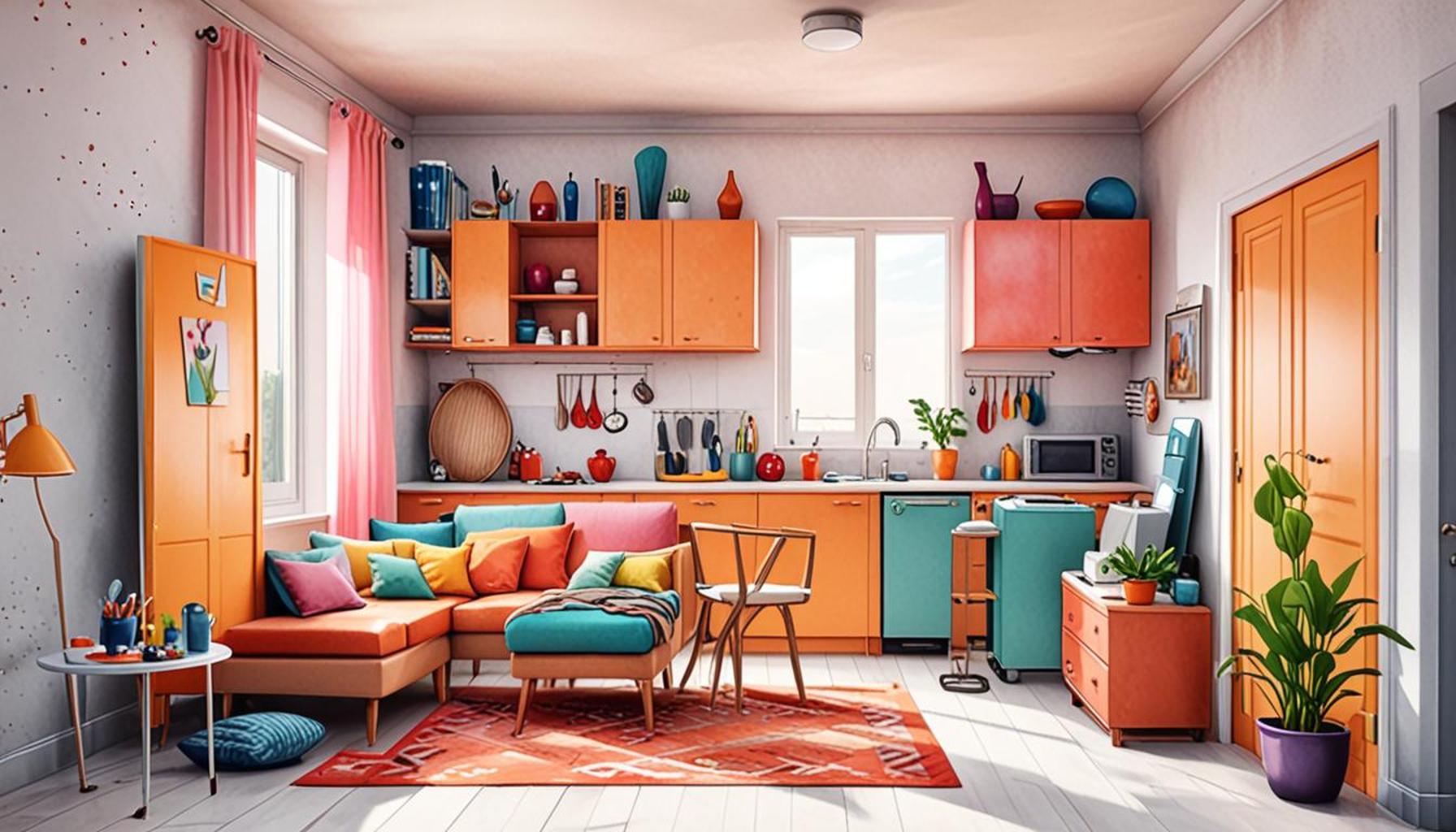
Creating a Minimalist Lifestyle: How Spatial Efficiency Improves Well-Being

The Importance of a Clutter-Free Space
Have you ever felt overwhelmed by the clutter in your home? It’s a common scenario for many, particularly in bustling cities of Nigeria, where space is often limited. In the heart of urban areas like Lagos or Port Harcourt, housing can be compact, and the accumulation of belongings can create stress and disorganization.
A minimalist lifestyle promotes spatial efficiency and reduces distractions, enhancing overall well-being. By embracing minimalism, individuals can experience numerous benefits. These benefits extend beyond just having a neat home; they can transform how we approach our daily lives.
- Improved mental clarity: A tidy environment fosters a focused mind. Imagine walking into a room that is free from clutter. The chaos of myriad objects competing for your attention fades, enabling clearer thoughts and more productive work.
- Reduced stress: Less clutter can lead to less anxiety and a more serene living space. In a society where many face daily pressures, a calming, organized environment can be a refuge from the chaos outside.
- Enhanced creativity: A simplified environment encourages innovative thinking. When distractions are minimized, the mind is free to wander and explore new ideas, which is crucial in creative industries and professions prevalent in Nigeria.
In cities like Lagos, where the hustle and bustle can be overwhelming, adapting your living space and possessions to align with minimalist principles can yield profound improvements in quality of life. For instance, instead of investing in multiple decorative items or kitchen gadgets that seldom get used, one could choose a handful of multifunctional pieces that contribute to both aesthetics and functionality.
Moreover, minimalist living promotes intentionality in our choices, from the objects we keep to the experiences we pursue. Wouldn’t it be refreshing to focus on what truly matters? Instead of keeping every item out of obligation or sentimental value, minimalism encourages individuals to evaluate what brings genuine joy and utility to their lives. Through this lens, every choice becomes an opportunity for enrichment, leading to a more purposeful existence.
In a country rich with diverse cultures and traditions, embracing simplicity can also mean prioritizing experiences over possessions, such as spending quality time with family and friends, which is a cornerstone of Nigerian social life. By reevaluating what we surround ourselves with, we can cultivate a lifestyle that celebrates not just minimalism, but mindfulness and well-being.
As you consider adopting a minimalist approach, think about your living space and the tangible items that define your environment. Start small—perhaps by decluttering a single drawer or shelf—and witness the transformation of your space and mindset.
LEARN MORE: This related article may interest you
Understanding Minimalism: A Path to Spatial Efficiency
Minimalism is more than just a design aesthetic; it is a lifestyle choice that encourages individuals to seek spatial efficiency by reducing excess and focusing on what truly matters. In Nigeria, where urban dwellers often navigate tight living conditions, understanding and adopting minimalist principles can play a crucial role in enhancing overall well-being.
The core of minimalism lies in the mantra – less is more. By adopting this philosophy, individuals start to scrutinize both their physical possessions and their mental clutter. This reevaluation can lead to significant shifts in how one experiences daily life. For instance, in Lagos, where many individuals live in compact apartments, embracing minimalism can transform how space is utilized. Rather than being overwhelmed by a plethora of items, individuals can learn to appreciate the beauty and functionality of fewer, well-chosen pieces.
- Increased Space: A minimalist lifestyle allows for more open space, which can enhance movement within the home. This can be particularly advantageous in Nigerian cities where space is at a premium. Clearing out unnecessary items creates an environment where one can breathe and feel less constrained.
- Improved Organization: By adopting minimalism, individuals often find their lives become more organized. Without excess clutter, keeping track of important belongings and maintaining a tidy space becomes far more manageable. This organization can lead to improved efficiency in daily tasks, contributing to overall well-being.
- Mindful Consumption: Minimalism encourages individuals to make conscious choices about what they bring into their homes. This can foster a sense of responsibility and sustainability, as Nigerians increasingly become aware of environmental impacts. Purchasing items that are durable and multifunctional not only enhances spatial efficiency but also reduces waste.
In a society characterized by vibrant markets and a culture of vibrant celebrations, the tendency to accumulate decorative items can be strong. However, minimalism challenges this norm, inviting individuals to appreciate simplicity over extravagance. Imagine a cozy living room furnished with a few high-quality items rather than an array of knick-knacks; the space feels inviting and free, allowing interactions with family and guests to take center stage.
Moreover, according to recent studies, living in a decluttered environment can lead to improved emotional health. Individuals report feeling less stressed and more focused in organized spaces. Thus, adopting a minimalist lifestyle doesn’t just improve one’s physical space; it cultivates a sense of peace and mental clarity that can benefit every facet of life, from career performance to personal relationships.
As you contemplate transitioning toward a minimalist lifestyle, begin by assessing the items that fill your space. Ask yourself: Do these possessions elevate my quality of life or contribute to a sense of overwhelm? Taking a critical look at what surrounds you is the first step in creating a serene, efficient living environment that nurtures your well-being.
Creating a Minimalist Lifestyle: How Spatial Efficiency Improves Well-Being
In our fast-paced world, the concept of a minimalist lifestyle is increasingly valuable. This philosophy not only emphasizes reducing physical clutter but also highlights spatial efficiency as a key to enhancing overall well-being. By deliberately organizing our living spaces, we create environments that foster clarity, focus, and peace. Various factors contribute toward achieving this ideal balance, and below, we explore several significant advantages.
| Category | Benefits |
|---|---|
| Decluttering | Promotes mental clarity and reduces stress. |
| Functionality | Maximizes usability of space, enhancing daily productivity. |
| Aesthetic Appeal | Creates a visually pleasing environment that encourages calmness. |
| Sustainability | Encourages mindful consumption, leading to reduced waste. |
These advantages illustrate how embracing a minimalist lifestyle can significantly uplift our daily experiences. By aligning our surroundings with our needs and priorities, we not only declutter our spaces but also clearly demarcate time for self-care and personal growth. As we navigate through the complexities of modern living, the principles of spatial efficiency could be the key to unlocking more meaningful interactions and deeper fulfillment in our lives.
ADDITIONAL INSIGHTS: Expand your understanding here
Creating Space for Mindfulness and Connection
One of the more profound impacts of adopting a minimalist lifestyle is the enhancement of mindfulness and deeper connections with people and environments. In a fast-paced society like Nigeria, where cultural vibrancy often leads to sensory overload, creating uncluttered spaces can become an oasis for mental recuperation and emotional connectivity.
When individuals reduce the chaos in their physical surroundings, they inadvertently create a space for mental tranquility. The concept of mindful living encourages individuals to appreciate the present moment, allowing them to experience life’s pleasures in their entirety. Instead of feeling rushed or scattered, the act of decluttering provides an opportunity to pause, breathe, and engage authentically with both oneself and others. Picture a thoughtfully arranged nook in the corner of a room, designed solely for reflection or family gatherings. Such spaces foster quality interactions, whether discussing issues around the dinner table or sharing stories with friends.
Moreover, a minimalist approach can encourage individuals to invest more time in activities that truly resonate with them. For instance, reducing unnecessary possessions opens the door for more communal experiences, such as participating in local events, cultural festivals, or even reconnecting with nature. In Nigerian cities where proximity to nature may feel limited, adopting minimalism can shift focus towards making the most out of available environments—be it a local park or a serene lakeside. Instead of spending weekends surrounded by excessive material items, individuals can spend their time fostering relationships or engaging in creative pursuits.
In the hustle of Nigerian urban life, where many are vying for success, it is crucial to remember that our physical space often reflects our mental state. Clutter can act as a visual distraction, hindering focus and productivity. Conversely, a minimalist environment has been shown to improve concentration, thereby boosting work performance and creativity. Productivity thrives best in environments free from unnecessary distractions. An organized desk space, for example, enables clearer thinking and helps one approach tasks more effectively, both at the office and in home-based businesses.
- Emotional Wellness: Numerous studies indicate that minimized living spaces contribute to lower levels of anxiety and increased emotional stability. Mid-sized surveys in urban areas suggest that individuals who embrace minimalism often report feeling less overwhelmed and more fulfilled.
- Room for Possibilities: Minimalism encourages the exploration of new interests, hobbies, and experiences. By prioritizing quality over quantity, individuals are freed to pursue lifelong passions that may have been overshadowed by clutter.
- Balance and Harmony: The simplicity of a minimalist lifestyle can create a sense of harmony in everyday life, fostering balance across various aspects—be it family, work, or personal goals. This harmony contributes to higher levels of happiness and satisfaction.
In a landscape rich with diverse lifestyles and societal norms, minimalism offers a fresh framework for individuals seeking balance in life. By removing distractions and focusing on quality connections, needful intentions, and mental wellness, one can foster an environment conducive to overall well-being.
ADDITIONAL INSIGHTS: Expand your understanding here
Embracing Minimalism for Enhanced Well-Being
In conclusion, creating a minimalist lifestyle is not just about living with less; it is a transformative approach that can significantly enhance well-being and mental clarity. As highlighted throughout this discussion, adopting minimalism can lead to improved mindfulness, emotional stability, and stronger relationships. In bustling Nigerian urban environments, where sensory overload is commonplace, embracing minimalism allows individuals to cultivate peaceful spaces that encourage reflection and authentic connections.
By prioritizing spatial efficiency, individuals can decrease anxiety and distractions, paving the way for greater focus and productivity. The evidence suggests that those who actively engage in minimalist practices often discover newfound freedom to explore passions and hobbies, enriching their lives beyond the accumulation of material possessions. Simple adjustments, like decluttering and organizing spaces, can yield profound improvements in life satisfaction and harmony.
As we navigate a world increasingly defined by consumerism, it is vital to consider the profound benefits that a minimalist lifestyle can offer. This lifestyle encourages individuals to cherish meaningful experiences and connections while fostering a sense of balance across various facets of life. Ultimately, embracing minimalism is an ongoing journey—one that aligns our physical spaces with our mental health goals and leads to a fulfilling, enriched existence. As we continue to explore these concepts, the insights gained can empower us to make informed choices that resonate with our quest for well-being.